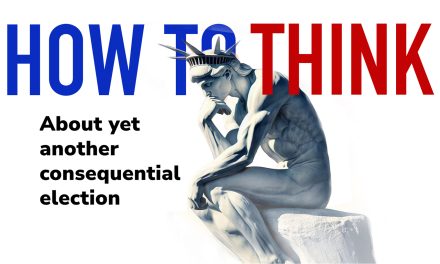
Welcome to my last tutorial for Kamala Harris. I’m gratified that she and her supporters really seem to care about freedoms, rights and the welfare of minorities. I’m a minority of one- and could do with some serious help from them.
Diversity’s Ascendency: It is in that grateful spirit that I offer this essay. Please treat my words as a none-too gentle reminder about our fast-changing world where minorities will once again be shown their rightful place which has always been at the bottom- or outside. Amidst all the sloganeering and shouting in support of women, colored people, immigrants and LGBTQ+, we seem not to have noticed that minorities have never had it so good as in our time. Anywhere. Ever.
Until the latter part of the 20th century, it would have been impossible for someone like me (Indian, brown skinned, middle-class, immigrant) to become a global citizen with all the political rights and freedoms of a native born American. I can confidently say that I am not discriminated or treated badly by the average American. Sadly, the mistreatment only comes from those who see me as insufficiently ‘woke’.
But this may be changing. With the West’s receptivity to immigrants wearing thin, the golden age of the weak and the meek is now emphatically over. Its last rites are being performed as attitudes shift and policies change from Tuscaloosa, Tel Aviv and as far away as Taipei. Everything is changing. If you thought the smart phone had devastated our attention spans, mental health and relationships, just wait until AI hits us. It is fair to say that nothing including our personal and societal ‘values’ and ‘principles’ will survive in the form that it is now. Even basic notions such as ‘loving our neighbors’ and ‘compassion for the weak’ will take a beating- and many of our favorite assumptions will soon be jettisoned along with the weekly trash. Think how in just a decade or two tens of millions started fervently embracing ideas such as polyamory, gay marriage, trans-issues, and anti-Zionism.
Exquisite Instrument Between Our Ears: THINKING is the operative word. Only deep, broad and precise, subtle, nuanced and sophisticated thinking can help us navigate these and other coming changes. This requires:
- RELEARNING the world and how it works. The world is not what we believe it to be and doesn’t work the way we want it to. This is why we feel shocked and traumatized about recent developments.
- RE-EXAMINING our assumptions about life. The relative security and affluence of the last 50-60 years have engendered false assumptions about the nature of life and what it means to live in a healthy society.
- RETHINKING our expectations from the world and life. We have seriously misunderstood the nature of societal life. This has raised wholly irrational expectations out of institutions such as family, society and government.
Contrary to the unearned ‘wisdom’ of America’s privileged new-agers, it is foolish to try to develop an ‘abundance mindset’- as long as we live in a finite world. Acknowledgment of this requires all intelligent people to recalibrate their rights, expectations, and entitlements. If not, like other ancient and once powerful civilizations, we too will end up on the dust heap of history.
To be even more plain, our challenge for the next fifty years is not how to drive greater progress- it is how to hold on to what’s left of our families, societies and democracies. Success itself should be nothing more (or less) than stopping the seemingly irreversible slide before it reaches the point of no return.
The first step to preventing civilizational collapse is recognize the existential nature of the problem. The next is to stop blaming others for it. Contrary to convenient mythology, the Western world’s elite are not composed of the usual suspects (billionaires, senators, celebrities). We, highly educated liberals and progressives are the larger and (collectively) far more powerful members of the democratic aristocracy. We are to blame for having let down our democracies.
My first three lessons touched upon how Democracy, Leadership and Reality (specifically the laws of nature and systems) work. My lesson today is on Diversity or more precisely, how it works in society. It deals with the relationship between the powerful (strong, majority) and the powerless (weak, minority).
Lesson #4: Diversity May Not Be Worth The Noise
While it is true that Kamala Harris didn’t make it her explicit mission, as Hilary Clinton did, to break the glass ceiling, her candidacy was effectively based on race, gender and a host of minority-driven agendas. Her best attribute was always going to be that she was a decent person- and NOT TRUMP. This in normal times should have been qualification enough except that by the turn of the century, 7Up had already sold us on the idea of ‘Normal Is Boring’. Thanks to Madison Avenue, Silicon Valley and social media, we now inhabit the world of the alternative, the subversive and the fringe. We should not have been surprised.
As always pundits (paid by the word) are the last to wake up to unfashionable (normal) reality. This has left them scrambling to share their post-election ‘wisdom’:
‘Minorities don’t think or vote as a bloc” Who would have thought that some of them even have minds of their own? ‘The price of eggs or gasoline is more motivating than seeing themselves (minorities) on television.’ ‘Implicit bias is far less upsetting than unsafe streets, sexual propaganda in schools, and the breakdown of traditional values.’
None of this should have surprised the astute observer. Three decades of consulting on diversity and cross-cultural conflict had shown me that minorities are not always enthused about remaining minorities. Most of them desperately want to join the mainstream- unless religion or culture makes integration impossible for them. Most importantly even sensible minorities are wary of ‘increasing’ diversity- for entirely reasonable reasons. The fact is that nobody and nothing needs more diversity- unless it is absolutely unavoidable.
Oh, and it is rather silly to be ‘for’ diversity. That would be like being “for” gravity or nature.
But why blame the pundits, we the politically aware voters continue to treat democracy like a spectator sport. Like British football hooligans we enthusiastically cheer our team, scream insults at the other side- and dissect the election results for any explanation that we can live with. We pontificate about why Kamala Harris did poorly amongst Women, Black people, Men and Hispanics. We talk of ‘Dark Money’ and the ‘Deep State’ and those ‘deplorables’ who are stupid enough to vote for an obnoxious misogynist.
Focused solely on who is winning and who is losing, we cannot see that the whole bloody system is close to breaking down. We cannot even understand that very soon it might no longer even matter if your side wins.
Questions For the Diversity Activist. Most people, especially those that are passionate about diversity, have only a crude idea of what it entails. It usually boils down to inclusion ‘good’, exclusion ‘bad’, or ‘equality’ and ‘justice’. We haven’t asked even the ‘normal’ questions asked by ordinary reasonable people:
- What happens to any system (family, organization, city) when diversity increases
- How will we raise the resources (time, money, competence) that we need to manage the inevitable complexity coming from the increased diversity.
There are more questions, but these are the most self-evident. Despite not asking them and not ever having an answer to these unasked questions, for a couple of generations now, the elite of the West have clamored for ‘greater’ diversity. Naturally, this increase in diversity is demanded only in cushy and well- paid jobs. Nobody, as far as I know, gets all worked up about the lack of ‘representation’ amongst loggers, garbage workers, or frontline soldiers (cannon fodder).
Just to be clear- I am not against diversity; it is vital to human existence. Life on planet Earth is extraordinarily diverse, just as the human body is, itself, home to almost 1,000 different species of microbes, not to speak of the viral tourists who show up every flu, dengue or shingles season. Scientists have found that to prevent inbreeding a population needs at least 50 people, while to prevent eroding of the evolutionary potential it needs at least 500 people. Diversity is vital for ponds, plants, and people.
Now that we have established the importance of ‘diversity’, let me also say that any tribe, society, or organization that has survived for a few generations pretty much already has all the diversity it needs. Introducing greater diversity into a stable system is asking for instability. Introducing diversity into an unstable system is suicidal.
Here are two more questions: When you say you are “for” diversity, what does that even mean? Are you ‘for’ it the way you are ‘for’ love, empathy and compassion- is it an aesthetic thing, a moral value, or a political idea? Or are you ‘for’ diversity the way you are for ice cream, cats or little babies, because it makes you feel good? I know some folks are ‘for’ diversity because homogeneity and exclusion is no longer fashionable. And where exactly do you want to see more diversity? Do you support increasing it in your classroom, workplace or society- or all of them? What about on the streets? What about in your home or bedroom? Under what circumstances do you think we should stop increasing diversity? When there is an acute housing shortage? When cross-cultural conflicts threatening to destroy the company? When polyamory is more trouble than it’s worth?
The well-adjusted Progressive Leftist will no doubt respond by saying I’m blowing smoke. Of course, she knows what diversity is, and why she is ‘for’ it. She simply wants to create a more inclusive world where the historically marginalized and weak (people of color, women, disabled and LGBTQ+) can lead a more dignified life. She just wants to create opportunities for the marginalized so they can compete on a more equitable playing field. What kind of a jerk can be against dignity, respect and equity? “Oh, and by the way”, she will add, “Research shows that increasing diversity makes people more tolerant, teams more creative, and companies more profitable.” She may or may not add that it increases her dining and dating options- and makes her feel virtuous.
The questions she won’t ask, though, are these: What has half a century of increasing diversity and ‘representation’ brought us in America (or the UK, France, Germany)? Are our families, communities and democracy stronger (in Sweden, Norway, Denmark)- and if they aren’t- did we do something wrong? What are we missing, and what we are not factoring in?
Diversity and Power: The Left has been talking about power and oppression non-stop since around the time of Marx- and yet they don’t seem to understand it very well. Their feelings about power tend to be the usual bromides about its ‘corrosive effects’ or how ‘it all comes down to patriarchy’. Mostly they complain that the wrong people have it.
To understand diversity we need to first understand what power is and how it is created. Shorn of all moral or political connotations, power is merely the ability to do something yourself, motivate others to do it for you, or influence the course of events. Perhaps it is easier to understand how power works in terms of the jungle- a place where the rules of nature are unhindered by human sensitivities or sensibilities. In the wild, all power must be earned. Usually this means fighting others for it or threatening them with dire consequences if they challenge you. To put it in the language favored by academics, the norm is almost always power-over and not power-with.
Furthermore, in the jungle, once power is earned it must be guarded jealously by warding off prospective opponents and enemies. When younger and stronger contenders arrive, they will inevitably seek to overthrow the most powerful and fight each other to establish their right to rule over the pride, tribe or kingdom. This means that those who have power will need to continuously exercise it- to prevent others from getting ideas. History is replete with tales of internecine slaughter, with siblings, uncles, and nephews killing off every known contender (even babies) to capture power. Gaining and keeping power has almost always involved extraordinary bloodshed and unrestrained cruelty.
Until, that is, the advent of the liberal age. Everyone knows that when a democratically elected leader loses an election, completes their term (or becomes senile), they will relinquish power without clinging on to it. They follow the rules of the electoral game.
What people forget is that a democracy is the only political system where the powerful (rulers, military, business, landlords) consent to sharing power with others. Take a moment to digest that. In a democracy, people with power choose to give some of it away. Just to be clear, the powerful don’t really need to share power with anyone- it is counter-intuitive, even ludicrous. The most natural thing to do is to concentrate power- like Putin or the Arab Sheikhdoms. In fact, a democratic system is not just extra work, it is also a thankless responsibility- because when things go belly up, guess who gets blamed? Duh!
The Democratic Attraction:
Many leaders and the elite, especially in the latter part of the 20th century, chose to share power and create a democracy because:
- They were inspired by the idea of creating and belonging to a liberal and egalitarian nation.
- The USA, Europe and a host of Western NGOs promise aid if they democratize and establish protections for race, gender and sexual minorities.
- They believed peace between contending (domestic) groups could be purchased by establishing a transparent and fair political process.
- They were reassured by the promise that a reason-based liberal society would allow them to rise to elite positions on the basis of objective merit.
It should have been self-evident that people in power would not have acquiesced to sharing it if they had believed that in doing so, they (and their children) would be actively disadvantaged. Nor should it have taken a genius to figure out that when a democracy is no longer a meritocracy, those who once acquiesced to sharing power would now seek to grab it back.
The Diversity Fallacy:
It is one thing to seek to protect minorities and quite another to seek to empower minorities at the cost of the majority or dominant groups.
The elite’s consent (to share power) is based on everyone adhering to a very narrowly defined (and agreed upon) system of political rights and responsibilities. As soon as these rights are extended beyond the political realm into the social and economic realm, the agreement breaks down.
What those advocating for ‘diversity’ don’t get is that their democracy is a finely-balanced system where the powerful have agreed to share political power- without having to relinquish their economic or social advantages for all time. This is why the idea of ‘equity’ is a grievous misunderstanding of the notion of equal political rights. When a level or ‘equitable’ playing field is forced upon the elite by handicapping them, they no longer have any incentive to participate in the democratic process. Democracy doesn’t work for them anymore and is now an existential threat.
It is true that as societies change, power relations also shift. However, this tends to take place organically, and over long stretches of time, allowing people to adapt to the changes. Revolutions can usurp power, but only by destroying enemies. When minorities seek to increase their share of the economic pie and forcibly shift the power relations (outside of the political process), by demanding special exceptions and privileges to ‘protected’ groups, they disrupt the democratic agreement between the elite and everyone else. This agreement is based on a narrow adherence to the rules of the game and settling all emerging disputes through dialogue, debate and negotiation.
Once the elite suspected that minorities, not being satisfied with equal political rights, now want an equal share of social and economic outcomes, they will resist, speeding up the breakdown of the democratic contract. Think about it- if minorities (being its greatest beneficiaries) don’t want an objective democratic process, why should the majority or the elite want it?
Limits To Diversity:
- The greater the diversity, the greater the complexity. To take the example of a family, the addition of every new member (through birth or marriage) makes mundane tasks (such as shopping, cooking, cleaning, decision making) more complex and potentially messy.
- The greater the complexity, the greater the investment needed. As the family gets bigger parents are forced to spend increasing amounts of time, energy and money to organize and manage the family.
- The greater the investment, the greater the pressure on resources. As resources are stretched, corners will get cut, unhappy compromises will be made, and the family’s quality of life will deteriorate.
- The greater the pressure on resources, the greater the deterioration. As the home can no longer provide expected levels of comfort or security, conflicts will increase, and members will start to seek sustenance outside of the family.
- The greater the pressure on resources, the greater the deterioration. As the home can no longer provide expected levels of comfort or security, conflicts will increase, and members will start to seek sustenance outside of the family.
The point is not that all forms of diversity are destructive- but that diversity is not an unalloyed good or a free ride. Diversity always increases the pressures on the system. Contrary to conventional wisdom and despite all its attendant attractions, two cannot live as cheaply (or as peacefully) as one. My advice for Kamala Harris, the Democrats and all those who are concerned about minorities is this:
Majority or dominant groups will protect minorities only when they don’t feel threatened- and have concrete incentives for doing so. It is rank foolishness to poke the bear.