
• ISSUE ONE • NOV 4th, 2024 • ASHOK PANIKKAR •
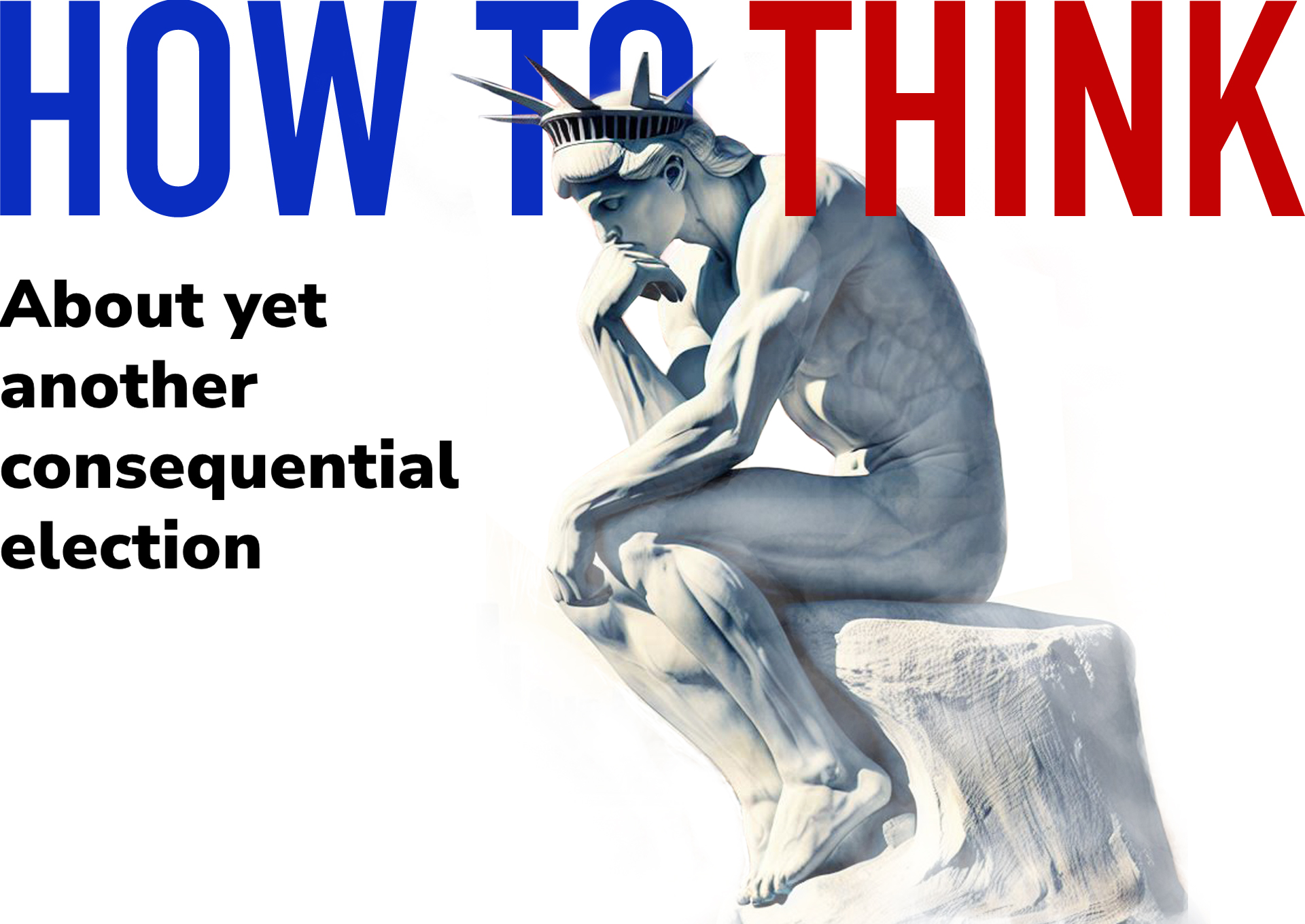
Those who want to save democracy don’t know what it is. Those who wish to destroy it wouldn’t recognize it if it hit them in the face.
Traveling around nineteenth century America, Alexis de Tocqueville encountered an extraordinary Enlightenment-era experiment in egalitarian politics. Coming from feudal Europe mired in centuries old squabbles, conquests and counter-conquests, he found a thriving, if contentious, democracy. His book ‘Democracy in America’ is not just a compelling study of the young nation’s norms and mores, it is also an astute observation of what made American democracy tick.
Tocqueville attributed American democracy’s strengths to its robust economy, the strong place that religion (Christianity) had in society, widespread respect for the law, and an unusual sense of civic duty. He admired how, across the nation, townhall meetings helped even ordinary citizens develop the skills and dispositions that were needed for democratic functioning. And he was prescient enough to warn of the ever-present danger of a “tyranny of the majority”.
Tocqueville traveled by steamboat, stagecoach, horseback and canoe through a nation whose Black and Native American population was disenfranchised and public life was almost completely monopolized by propertied white men. These (privileged) citizens, for all their quarrels, seemed to agree on two vital things- WHO they were (Americans), and WHAT they were (a free republic). While today’s America is far more egalitarian and inclusive, I dread to think what Tocqueville would have written about it if he had traveled today.
America’s Dangerous Relational Dynamic
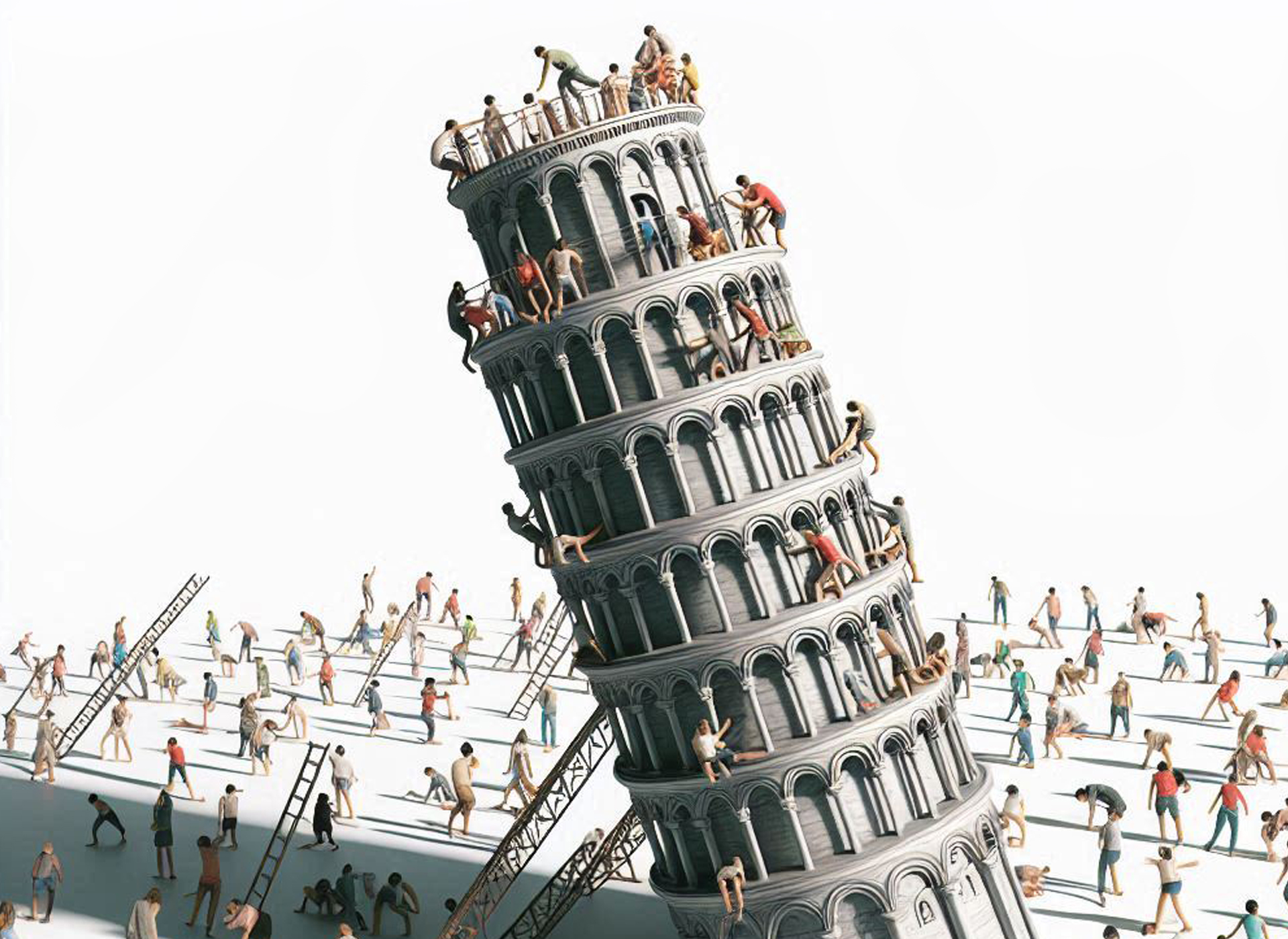
As a mediator I am fond of saying that a diverse and liberal democracy is the most complex relationship that anyone can be part of. Compared to a democracy, even a dysfunctional marriage or a messed-up company is a piece of cake to manage.
As far as nation states go, the USA is an anomaly. Unlike relatively homogenous countries it is an immigrant nation with 345 million people (of all possible colors and races, languages and cultures) coming from every nation on the planet. Some of these cultures (and the mindsets that accompany them) are as different from the prevailing Western, liberal culture as tender coconut water is from a Starbucks Frappuccino. I would venture to predict that if a group of experts sat down to design a political system for such a complex nation in 2024, a liberal democratic system might not be the first one that comes to their mind. And for good reason, consider what it would take to get such a diverse population to agree on anything. Consider, too, that if consensus was difficult in the age of stagecoaches and the telegraph, how much more difficult it would be today with our hyper-urbanization, the internet and social media. Imagine giving every person a vote and all people and groups (even the most obnoxious ones) a voice. Then imagine having to tolerate protest and resistance from our opponents and accommodating groups that hate us (“Down With America”). Finally, imagine the well-meaning ordinary citizen, who follows all the rules and is yet left in the lurch for no fault of his (and, worse, is blamed for the mess). As my erstwhile peers in consensus building used to say, building cooperative and democratic agreement is like herding cats- frustrating and never-ending work. What sane person would want to be President of such a nation?
In hindsight, if we had been been a little more more humble and sensitive to the laws of nature (and systems) we might have realized that managing an open, free and complex nation like the USA would require enormous (and continuous) investment of time, energy and money. Our inability to do so today means that we are now at risk of devolving into dysfunction and chaos- with some even talking about civil war or despotism. If we really wish to stave off this tragedy, our leaders and a critical mass of citizens would need to do something that might seem wholly counter-intuitive. They would need to get over their historic fascination for perpetual (social, cultural, political and technological) innovation and progress. They would also need to (at least temporarily) desist reforming and dismantling every institution or system that they see as inefficient, ‘inequitable’ or ”unjust’. The healthiest and most sustainable systems are not necessarily perfect, and every reform also has the potential to mess with the healthy bits. I appreciate that for a nation that has revolution and progress baked into its DNA, pausing on progress might present an enormous challenge.
Every institution, system and society needs a select few (people and leaders) who can function as the keepers of its original vision. If the USA had consistently nurtured such a group, we might have maintained our democratic culture of debate and civic engagement even in the face of progress and change. Moreover this would have helped root the citizenry’s imaginations and aspirations in ground reality and not allowed it to be seduced by the childish fantasy of tearing everything down to build a perfect society.
Just as an unregulated free market is ruinous, unregulated social and political progress, too, has dire consequences. The problems created by unfettered change cannot be resolved through even more unfettered change- even if well-intentioned. What this beautiful, complex and deeply troubled nation needs today is not even more innovation (with its uncertain results), but some serious reflection and soul searching.
If we don’t do this ourselves now, we might well end up being ‘saved’ by the next demagogue. Or even an all-powerful dictator who will create order and stability by abrogating all rights and freedoms and instituting a totalitarian-surveillance state. The upside is that if we do decide to go that route the Chinese and the Russians would be only too happy to provide us with advice. After all, Putin, no doubt remembers America’s role in ‘successfully’ transitioning his country into a ‘democracy’.
See, here’s the thing they don’t tell you: If women and men vote for different candidates, if the college educated no longer inhabit the same country as the working class folks, you have ALREADY lost your democracy. Your elections are now nothing more than circuses and your candidates are either skillful acrobats or tragic clowns.

Nine Cultural Non-Negotiables for Democracy
Just as a movie director is only as good as his last film, a politician is only as good as the last election or crisis (whichever comes first). And yet democracies are neither saved nor lost in one (or two) election cycles. Even more than the institutions and mechanics of democracy (Elections, Congress, Judiciary, Bureaucracy, Checks and Balances, etc.), what keeps a democracy going is the culture- and the mindset of its citizenry. Even structurally weak democracies can be revived as long as they still have a robust democratic culture. Here are my cultural non-negotiables for American (or any other) democracy:
1
A common understanding of how we define the USA as a nation, and who we are as its citizens.
2
A common understanding of what the future of the USA should look like and where we are headed.
3
A strong sense of love, pride and loyalty to the USA regardless of its (considerable) past failings.
4
An intelligent citizenry that understands how democracies work and are conscious of their roles and responsibilities.
5
A mature citizenry willing to eschew identity politics and hold the interest of the nation above minority (or majority) interests.
6
A generous citizenry willing to negotiate, compromise and even sacrifice to maintain their democracy (however imperfect).
7
A citizenry willing to take arms to protect its democracy and nation in times of external threats.
8
A leadership courageous enough to tell their supporters the truth, even if it costs them popularity or elections.
9
A leadership wise enough not to be led by passions, political fashions or personal ambition.
What We Have Instead
Most democracies in our globalized, connected and mobile world are teetering at the edge of chaos. Our institutions are weakening, our societies are fragmenting, and far from feeling any kinship- many of our citizens now thoroughly detest their fellow country men and women. It doesn’t take a genius to realize that, unlike in 1945 or in 1989, when democracy was in ascendence, we are living through its steady decline.
Democratic cultures are notoriously difficult to nurture. Democratic states that survived for decades, or even centuries, did so not because of their robust cultures but because (a) they were affluent enough to satisfy the population’s material needs, and (b) their institutions worked well-enough in times of upheaval. Eventually, under the weight of inefficiencies, contradictions, corruption and disappointments, the democratic culture almost always weakens and the institutions become dysfunctional. Without a strong culture, and with weakening institutions, the USA is now veering towards dysfunction, anarchy, and possible despotism.
So here we are as we ready to elect the 47th President of the United States of America, a situation that would be comical if it was not potentially catastrophic. This is why I call the United States of America:
An Unintelligent Democracy
To be clear, going by the non-negotiables listed above, there are very few truly robust democracies in the world- let alone any truly intelligent ones. In fact it would not be amiss to say that even the best democracies are always hostage to an immature or unwise citizenry and it is the citizen that is responsible for the dumbing down of a democracy- not the leaders who (unlike the people) can always be replaced.
An unintelligent democracy is one where the citizenry and the leaders are primarily driven by their baser emotions and narrow self-interest. Such a citizenry can be manipulated by those who speak for narrow identity or interest groups and appeal to tribal loyalties. Such a democracy may survive for a while, as long as the economic pie is large enough to be shared amongst the quarreling groups. But as soon as the pie stops growing or diminishes- the hidden tensions and stresses burst out into the open. At such a time (today?) the nation essentially becomes ungovernable, flying on a wing and a multitude of prayers.
The problem with monarchies has always been that however brilliant, compassionate, or wise today’s monarch is, you are also stuck with their less than stellar progeny tomorrow (‘the bad prince’ problem). Democracies don’t have this exact problem since (at least theoretically) we don’t allow dynastic succession. The problem with democracies is somewhat different. It is that, contrary to conventional wisdom, democracies are not naturally strong and self-correcting. If anything they are eminently susceptible to corruption and trivialization.
For instance, generally speaking the electoral system works in at least one of two ways:
ONE: In prosperous (and stable times) democracies reward charismatic, glib, and mediocre candidates who flatter and bribe their constituents while selling voters on their incessant positivity (“Morning in America”). After all, we the people, don’t like party-poopers or Cassandras.
TWO: When things are bleak (and in a polarized society) democracies reward those who trash-talk their opponents who threaten to destroy their enemies (“Lock Him/ Her Up”). After all, we the people, love those who hate our enemies. With the former you get a charlatan, with the latter a demagogue. Either way, we are left with leaders selling themselves through photo-ops and curated sound bites and forced to make increasingly outlandish promises to their constituencies. It is not just embarrassing, it is downright suicidal.
An Intelligent Democracy
This is not going to endear me to the reader, but most leaders and citizens are unworthy of their democracy. We are just not virtuous or wise enough to manage such an idealistic and complex system.
Whoever wins this election would do well to urgently invest in whatever it takes to improve the quality of our citizenry. Leaders emerge from the citizenry, not the other way around. We need to put substantive resources towards nurturing our public intelligence and our civic behavior. An intelligent democracy is one where the citizenry and leaders are motivated by the common good and make their decisions through rational argument and not appeals to emotions or tribal loyalties. Such a democracy is not driven by passion (from the Left OR the Right) and the citizenry will always be wary and skeptical of those who would try to drive a wedge between them.
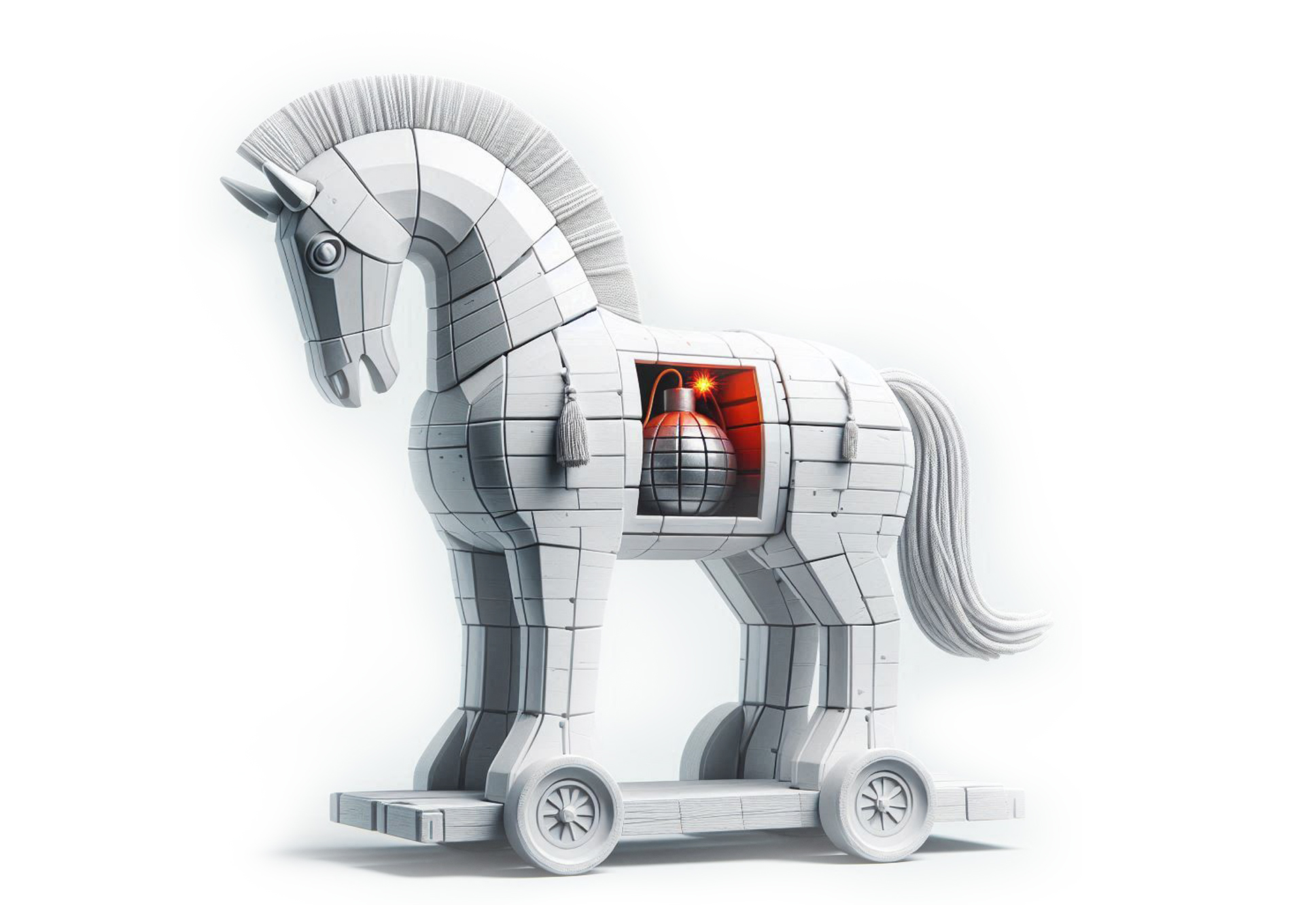
The question facing us should not be whether to vote for Harris or Trump. The question should also not be whether we should vote Democratic or Republican, and it certainly shouldn’t be about abortion, bathrooms, or Student Loans. These are nothing but neon-colored stickers on a ticking time bomb, distracting us from the coming explosion.
So, after decades of diversity/conflict management and teaching about democracy and citizenship, here is my thought-exercise for Americans as they go about exercising their critical franchise. This question is equally pertinent to citizens of other democratic nations.
Imagine that your squabbling, intergenerational, blended family is threatening to break apart with catastrophic consequences for everyone, especially the weakest members. Imagine too, that time is running out and you need to select a leader immediately. What kind of a leader (Patriarch, Matriarch or any other kind) would you pick to save your family?
It is my fervent hope that by 2028 or 2032, if we still have a democracy or a nation to save, we will have realized the folly of our narrow, self-interested, identity-driven ways. But it is possible that the shocks of the past 15-20 years have not been enough. Perhaps we need to realize the utter ridiculousness of our favorite positions and passions. Perhaps, like the Israelis and the Sudanese, we need to accept that there is absolutely no going back to a safer era. Perhaps it needs to hit us that it doesn’t matter one whit whether our president is a white woman, black man, or black woman- that the only thing that matters is whether they can keep the nation together. Perhaps it needs to hit us (hard) that we cannot keep pandering to self-interested groups and tribes anymore and must be, all of us, equally invested in electing the best equipped person for the most taxing and unforgiving job in the world.
Perhaps we also need to realize that there is no such thing as ‘our’ party winning. That women, black people, or gays cannot win if the nation itself doesn’t survive.
So many questions so little time
In an intelligent democracy the citizens, leaders and the media would not be bloviating about increasingly meaningless polls or endlessly speculating about who will squeak through. Who cares who wins, if the people lose? In an intelligent democracy we would be forcing the candidates, the political parties and the media to engage in discussions about the issues that really matter. We would be asking of ourselves the really hard questions that are hidden beneath the fluff and the tinsel:
- In what specific ways has the world actually become more dangerous (beyond the fear-mongering of populists)? And what does that mean for American culture, society and security? What does that mean for the next President?
- How will robotics and artificial intelligence change the way we communicate, work, entertain and procreate? How will we protect our families and communities? Are we willing to take tough decisions to protect our communities, even at the cost of losing out to China in developing AI? If not, what are we saying to our future generations?
- Can the USA continue to survive as a pluralistic democracy without radical institutional, political and cultural change? If we are unwilling to make these changes, are we saying that liberal values are less important than identity politics?
- Can the USA even be saved as a nation- without radical political reconfiguration. What would that look like? What is the most likely outcome if we continue to divide ourselves into ever more smaller (and competing) groups by gender, sexuality, race, color, or ideology?
The greatest failing of American democracy is that the American public are no longer being treated as ADULTS. Nobody is telling the American voters that democracy is not a bottomless reservoir of rights, freedoms, ever-increasing connectivity, and cool sneakers. Nobody is telling us the truth- that equality, justice and happiness are merely aspirations- and that we cannot blame the world or sue our leaders if our nation or we, the people, fall short.
Why is nobody telling us that all rights and freedoms come with even larger responsibilities and constraints? Why is nobody challenging the voters about the trade-offs required in governing and sustaining a democracy? How do we promote social equality while also promoting entrepreneurship and innovation, without which our economy is dead? How do we continue to offer special benefits for women and black people without alienating white men who might wish to be equally valued? How do we celebrate non-white cultures and still respect the Anglo-Saxon/ Christian culture that sustained democracy for 200 years? How do we protect sexual minorities while preventing the complete breakdown of the traditional family system? How do we balance individual rights and freedoms with the need to build a strong collective identity? How do we vote for someone we like when what we need is not likeability, but ruthless effectiveness?
What will it take for us the (educated, urban, cosmopolitan) elite to realize that it is not truck drivers, single-moms in projects, or even criminals who are the greatest danger to democracy. Will we ever have enough integrity to accept that it is us, the privileged, who have become illiberal and undemocratic- that we have become far too individualistic (and rootless) to sustain families, communities and democratic societies.
If the tired cliché “Of the people, by the people, for the people” is to mean anything at all- the people better roll up their sleeves and do some hard work- and invest in their own democracy. And to be clear, by investing I don’t mean protesting, resisting, or demanding endless handouts and benefits from the government.
This revolution will not be won through music in the cafes at night.
If we the people are sovereign, why should we need anyone else to be listening to us?




0 Comments