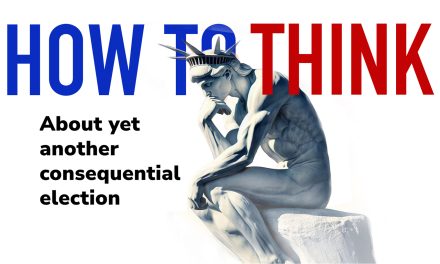
Welcome back to my continuing efforts to make sense of our messy and beautiful world- one idea and system at a time. Last week I started a new and limited series called Lessons for Kamala Harris. It will probably be between 3-5 essays detailing 6-7 lessons. Today’s essay has only one new lesson. But first allow me to recap:
Welcome back to my continuing efforts to make sense of our messy and beautiful world- one idea and system at a time. Last week I started a new and limited series called Lessons for Kamala Harris. It will probably be between 3-5 essays detailing 6-7 lessons. Today’s essay has only one new lesson. But first allow me to recap:
Just like gravity and Newton’s Laws, the crooked timbre of humanity cannot be engineered or wished away. Visionaries who treat reality as inconvenient, unpleasant or ‘toxic’, are doomed to fail or even be destroyed by it. The Nobel laureate V.S. Naipaul tellingly called his memoir, ‘The World Is What It Is’. The world is not and will never be what we want it to be, something reformists and idealists would do well to remember.
Skeptics might look at technology and ask- but haven’t we shifted the course of rivers, cloned sheep and created virtual worlds? Yes. Yes. Yes. And all of these and the many other brilliant feats of engineering and technology are indeed powerful examples of human ingenuity to imagine and innovate. But these were not created by summoning forces outside of nature, but by manipulating nature’s forces in the service of our vision. The problem arose when in our enthusiasm to innovate, we neglected other intersecting laws which we ignored or dismissed as being inconvenient to our mission. Because everything is connected, these laws are coming back to haunt us- with environmental, social, political and psychological consequences.
While it is true that grand visions are always inspiring- we seldom give weight to their costs- which are usually borne by others. A social or political visionary who meddles with the laws of nature (or systems) is playing on a much larger scale than a business visionary and if (and when) it goes wrong, could well take down her own society and nation.
The second lesson was that Hard Times Require Tough Leaders. It is not in good times that great leaders show up, it is when the going gets hard and when solutions and answers that worked in the past fail us.
In authoritarian and despotic states, only the tough and the fearsome are allowed to rule. The weak, the indecisive and the particularly empathic are weeded out before they become serious contenders. If the weak rise to the top because of, say, nepotism, they will either be killed by ruthless cousins or courtiers. If they escape such a fate, enemies of the regime will, sensing weakness and opportunity, overrun the state. What keeps these nations strong are the hard virtues such as strength, power, domination and even cruelty, which will always be valued over the soft virtues of inclusion, diversity, empathy and collaboration.
The beautiful thing about a liberal democracy (as well as its fatal weakness) is that individual rights and freedoms will be prioritized over onerous personal responsibilities that privilege survival of family, community, society and nation. Some commentators say that the adoption of these soft virtues will lead to a gradual feminization of society itself- making the men effete and sapping the brute virtues and capabilities that are necessary for the society and state’s survival.
Historians have noted that merely a few generations of affluence and security can start chipping away at a civilization’s strength and vitality. We are seeing now that in open and free societies, merely 5-6 decades of affluence and peace are enough to breed extreme complacency and promote competition for increasingly esoteric privileges. This combination of complacency and irrational competition saps the energy of society and weakens the will of the state to survive. Once this happens it is only a matter of time before things start crumbling first at the edges, and then at the center. In conditions of turbulence, as the soft leaders are shown up as impotent, tough leaders emerge. Tough leaders will emerge either democratically (through the ballot box), by accident (after the death of erstwhile President), by violence (through assassination or coups), or in the after math of national loss of face (humiliating defeat in war). Regardless of how it happens, the change of leadership will be accompanied by the destruction of the democratic system, tightening of social restrictions and the re-establishment of social hierarchies.
The new leaders being innocent of the trappings of sophistication, or the finer courtesies of the liberal civilization, will naturally strike everyone else as obnoxious and even barbaric. But by then society would have been so fragmented and the state so weakened that nobody would be able to do anything about it. After a short period of mocking, derision and resistance, democracy (with its sophistications and effete excesses) will wither away as society enters an era of brutal self-correction. This violent self-correction will continue until the natural mean (of the jungle) is restored.
The thing to remember is that none of this will happen quietly, the process of devolution will be tumultuous and will cause immense destruction and pain- before any sense of stability returns. Stability always returns, just not the way we want it to.
Lesson #3: Democracies Are (Exceptionally) Vulnerable:
Designing, maintaining, and repairing democratic systems (as a consultant) for communities, NGOs and businesses (as well as a lifetime of paying very close attention to history and geopolitics), have taught me that democratic systems are extraordinarily vulnerable. This vulnerability is not a bug, it is a feature- democracies are designed not to succeed forever or to be eternally sustainable. If they’d been designed for sustainability, they would have also been very skeptical of change and resisted what we have come to call progress. After all it would make no sense to change a winning game, right?
Successful companies, communities and nations don’t change just because the staff, members or citizens want it to change- they only change when external conditions no longer allow for life or business to go on as usual. Weak systems engage in periodic or constant change, and they don’t survive for long.
This is where a democratic system is simultaneously creative and inherently self-destructive. One of my favorite designers Saul Bass in ‘Searching Eye’, his little masterpiece of a film for Kodak, called this process “Constructive Violence and Destructive Beauty”. The beauty of the liberal democratic system is its constant reinvention, its destructive fluidity. We the people are always exercising our voice, pushing boundaries, and changing our minds, in doing so, we are also making new demands on the government and each other. Unceasing demands and competing demands make us restless, insecure, competitive, and increasingly less reasonable. This too is not a bug; it is the feature of the human voice- the more our voice is tolerated, the more insistent, strident and unreasonable it becomes- especially when it is not heard. It is only highly trained singers and highly restrained people who know when and how to speak- the rest of us will always get carried away with our voices.
Free Societies Are Complex Systems. All human systems, over time, become more complex. When nations and societies become exceptionally stable and affluent, people’s expectations and aspirations increase. They start to want more, demanding better goods and services as well as economic and social opportunities.
As memories of deprivation and violence fade the demands of the restless poor become more aggressive, as the desires of the privileged classes become more esoteric. The latter now aspire for what social commentator Rob Henderson calls “luxury beliefs”, these are ideas that signal to the viewer that the holder is particularly virtuous. These ideas today in the West include defunding the police, decriminalizing drugs, and rejecting the institution of marriage itself.
What people don’t realize is that complex systems like democracies are inherently fragile and vulnerable, they cannot be otherwise. They require enormous investment of energy and resources to manage and sustain. In an intelligent democracy citizens and leaders know that they cannot afford to aggressively reform or transform every existing system and institution that fails to meet their high standards of probity or efficiency. Given that every part of a democracy is connected to every other part, tinkering with one part will almost certainly weaken or even collapse another.
The fact is that if you want a perfect society, you really don’t want a democracy. Only totalitarian societies can aspire and execute (no pun intended) for perfection. If you want a democracy and that too a liberal one with individual freedoms and protection of minority rights, you will need to accept the idea that progress must be deliberate and hence will be stumbling and slow. Even as you try to reform one part of the system (by instituting scholarships to enroll marginalized students for instance), you will also need to repair newly vulnerable parts of the system (managing frustrations of dominant-group students, finding the money to fund the scholarships, investing in remedial tutorial services for the students, managing the cultural tensions that have arisen with the increase in diversity).
There is no such thing as free diversity, in societies the introduction of new diversity increases complexity and is hence, often an expensive indulgence.
Hence, contrary to popular wisdom, the most stable nation is not a diverse, free and open society with a liberal democratic government. It is a traditional, homogenous society with an authoritarian government like China or Russia. States like Singapore and the UAE are stable despite their diversity not because of it– their civic space is protected from conflict by draconian limitations on political expression.
Remember, in an autocratic system the people have no voice and hence no say in how it is ruled, this leaves the leaders free to govern as they wish to. And as long as they don’t grievously mismanage the economy, preside over famines, slaughter their people, or lose wars, they are mostly safe until the next strong man feels restless.
Naturally Stable States
Compared to a democracy, communist, fascist or theocratic states are ‘natural’ systems in that they are established through the exercise of brute strength and power. They are ‘natural’ because they don’t attempt to subvert the laws of nature (or the jungle). In the jungle the application of brute force almost always squashes dissent and creates order. In the jungle there is almost always peace- if we don’t also want justice for lambs.
In communism, the dictatorship of the proletariat rules by diktat. In fascism the nation is forcibly recreated in the image of the dominant race. In a theocracy the clergy makes all key decisions based on whatever is the approved scripture.
All these political systems are totalitarian and hence minimize complexity. Minimal complexity reduces the investment and resources needed to manage the authoritarian state which, in turn, makes governing them (almost) child’s play. Authoritarian states with well-developed security and surveillance mechanisms (as most of them are) can even be ruled by manipulative barbarians or muscular morons.
Just as technocrats believe that technological or bureaucratic fixes can improve human relations, visionaries and activists tend to believe that the sheer force of their dreams, passions, and righteous indignation can rid society and even humankind of inequality, injustice and cruelty. In democracies this has created a flourishing industry of visionaries, reformists and change-makers- who are motivated to attempt endless ‘transformation’. This endless procession of reform results in norms and laws being forced to change all the time. Changing norms, practices and demands increase insecurity and heighten anxiety. This then contributes to the steady decline of democratic systems as well as the weakening of societies all the way from New York to Mumbai to Bangkok.
The societies that are most likely to survive urbanization, globalization, individualism and digital technologies are not in the West or the cosmopolitan centers of the world, they are most likely to be in the traditional and emphatically illiberal regions of Africa, Asia and the Middle East.
With the benefit of hindsight, pundits will tell us that Trump’s victory was inevitable. But acknowledging this supposed fact doesn’t explain anything- and worse still prevents us from learning from this powerful experience (and heeding an urgent warning). As I have written elsewhere, even if Kamala Harris had won, the mid-long-term implications to American society and democracy would have been pretty much negative- and possibly even worse.
Even if a Harris Presidency might have protected reproductive rights and Trump grew manufacturing jobs, the complex problems that beset the USA and global democracy are beyond the capabilities of either president to repair.
As I wrote in my last essay, How to Think About the Election, a diverse and liberal democracy is the most complex relationship that we humans can be a part of. Connecting millions of people through a common (participatory) political system also makes democracy the most complex system created by humans. This makes a democracy an entirely ‘unnatural’ system that (instead of following the natural order of things where strength and domination allows for sustainability) seeks to impose an order based on freedom, rights, cooperation and protection of the weak. Nothing like this exists in the known universe. Even our superbly balanced planetary ecosystem, for all its complexity doesn’t allow most creatures autonomy or rights!
Let me be clear, I like unnatural systems, however they are inordinately expensive to maintain, let alone sustain. Energy is finite and most systems, be it an affluent sports club, an NGO, corporation or state will eventually run out of it. There are many things that make open and free systems vulnerable.
- Giving everyone a voice comes at the cost of social and political harmony.
- Giving everyone a vote (sovereignty of the people) comes at the cost of autonomy of the leaders.
- The checks and balances that are necessary for accountability slows down decision making and further constrains the autonomy of the leader.
- Periodic elections with a change of administration create economic and political instability- with policies being changed every political cycle.
- Politicians being forced to stand for elections every few years are forced to cater to changing fashions to maintain their popularity and keep constituents happy.
- When politics descends to catering to public tastes, unpopular (but good) ideas are shunted aside in favor of popular (and bad) ideas.
- Democracy operates on a complicated system of give and take and trade-offs. Having to negotiate every bill leads to watering down policies.
- Worse, constant give and take naturally breeds corruption. Democratic negotiation encourages ‘pork barrel’ politics (a term used for appropriating government spending for a politician’s district or favorite projects). This makes corruption a feature of democracies.
Even in the most developed and stable Western societies extreme mobility and connectivity have destroyed local communities, hyper-individualism has destroyed the traditional family, and globalization has weakened the nation state. Furthermore, the United Nation has collapsed under the weight of its inefficiencies, destroying the thin promise that once held out for a responsible and world government.
Questions That Were Not Asked
At a time like this, when everything is up for grabs and our continued existence as a free and open society is at stake, what kind of a leader should the US have elected? And is it any longer possible for such a leader to emerge in this country- given the state of its society?